
Quick Summary: Low vacancy rates in Australia, especially in Perth at 0.6%, help landlords maintain strong yields. However, even in tight markets, poor pricing or management can lead to longer vacancies and lower income. Active management, including timely rent reviews and maintenance, reduces vacancy risks. Smart Realty emphasizes early action to keep properties leased and protect investment returns.
Perth can feel safe for landlords when rentals lease fast, but Vacancy Risk Australia is not just about one low headline rate. A tight market can still hide Property Vacancy problems in weak pockets, poor pricing, or tired homes. This guide explains Vacancy Risk Australia, key Landlord Risks, and what the data means for yield. With 20+ years of Perth results, Mahi Masud and Smart Realty use clear, compliant advice to spot Vacancy Risk Australia early and act fast.
What a Healthy Vacancy Rate Looks Like in Australia
Use simple bands, not vague labels. A practical read is:
- Under 1% – very tight, strong landlord market
- 1% to 2% – still tight, but easing a little
- 2% to 3% – broadly balanced
- Above 3% – higher leasing risk and more rent pressure
SQM Research put Australia’s national vacancy rate at 1.3% in June 2026, with every capital city still below 2% in that release, so most markets remain tighter than normal according to SQM.
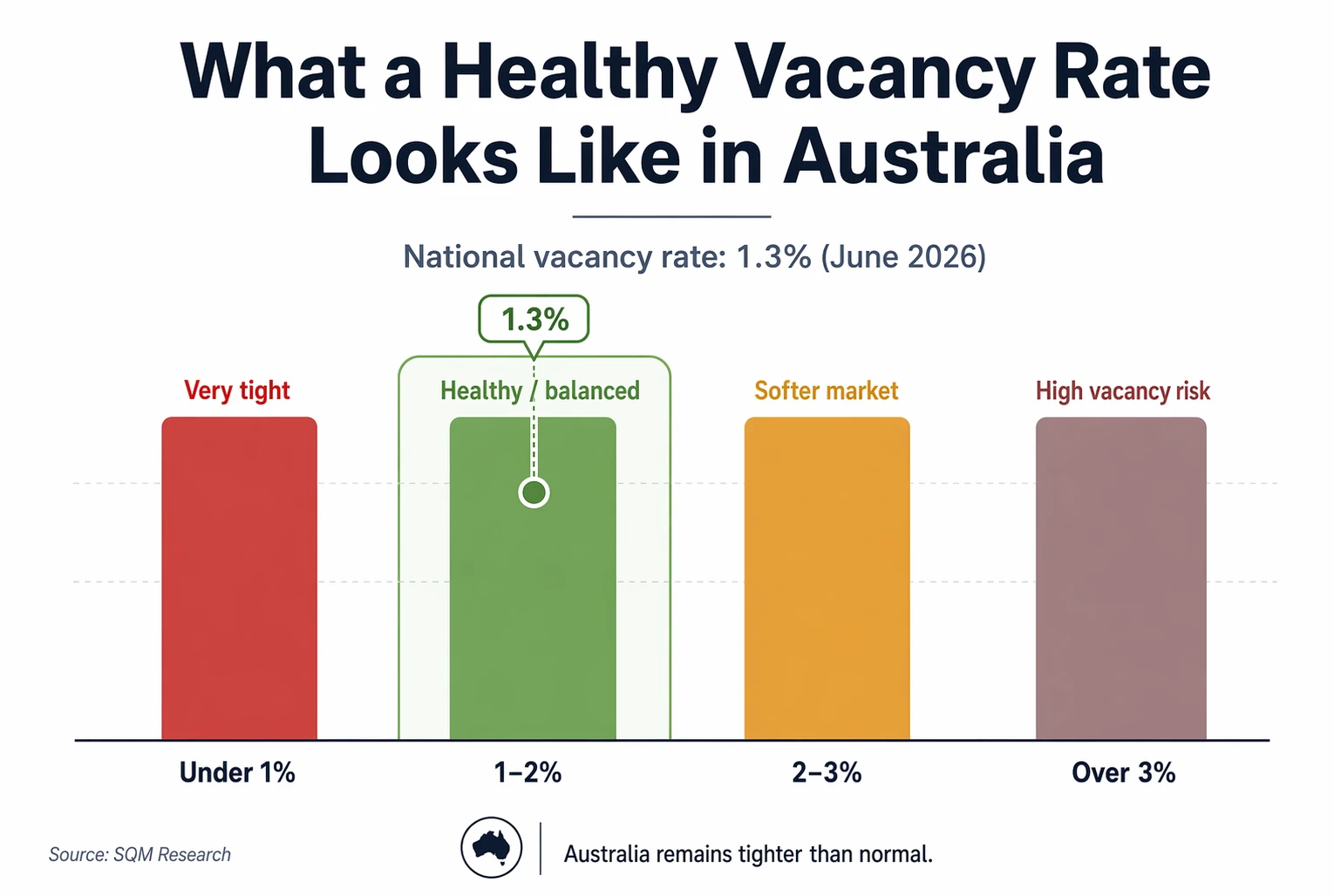
A national figure is only a starting point. The ABS shows rent trends vary by state and distance from the CBD, which means suburb, property type, and local supply matter more than a headline average in the ABS rental market insights.
Also Read: https://smartrealty.com.au/rental-property-management
How Vacancy Risk Impacts Landlord Returns
One empty week hits harder than most landlords expect. If your rent is $700 a week, that is $700 gone straight away. You still pay interest, council rates, insurance, and repairs. If you also cut the asking rent by $20 a week to fill the property faster, your yearly income drops again. NAB noted national gross rental yield at 3.7% in June 2026, so small rent losses can quickly weaken already tight margins in NAB’s June 2026 market update.

The bigger risk is slow leasing. SQM Research said Australia’s national vacancy rate was 1.3% in June 2026, while Perth sat at 0.6%, showing demand still varies by market in SQM’s June 2026 vacancy report. In weaker pockets, longer days vacant often lead to:
- more discounting
- lower-quality applications
- rushed tenant choices
One bad leasing decision can cost more than a short vacancy.
Also Read: https://smartrealty.com.au/property-management-companies
Which Australian Markets Signal the Highest Vacancy Risk
Perth still gives landlords a tight-market edge. SQM Research put Perth vacancy at 0.6% in June 2026, with Darwin tighter at 0.3%, while the national rate was 1.3% according to SQM data. For Smart Realty clients, that means lower leasing risk than most cities, but only if pricing and presentation stay sharp.
Risk rises faster in markets where vacancies are easing, not just high. Sydney and Melbourne were both 1.6%, and Canberra hit 1.7% in June 2026 reported here. Watch for these warning signs:
- rising online listings
- longer days on market
- rent cuts by nearby landlords
Low vacancy helps, but poor management can still create avoidable downtime.
Also Read: Landlord Services vs Self-Management: Cost Breakdown
How Smart Realty Helps Landlords Reduce Vacancy Risk
Reactive management costs money. Active management protects rent, tenant quality, and your asset. In Perth, REIWA says a balanced rental market sits between 2.5% and 3.5%, while Perth was at 2.0% in March 2026, so small mistakes can still hurt in a tight market (REIWA vacancy data). Smart Realty reduces vacancy risk by acting early, not waiting for a problem.
- Price reviews before the lease ends
- Renewal planning with enough lead time
- Fast maintenance to keep good tenants
- Clear communication so issues do not drag on
Smart landlords do not just fill vacancies. They prevent them.
That active approach matters even more when Perth remains one of Australia’s tightest rental markets, according to SQM Research.

Cut vacancy risk before it costs you rent. Talk to Smart Realty for local leasing, pricing, screening, and hands-on management that keeps your property occupied.
Frequently Asked Questions
Q1: What are the current vacancy rates across Australian suburbs and how do they impact property investment?
Low vacancy usually means faster leasing and firmer rents. Higher vacancy can mean longer downtime, more discounts, and weaker cash flow. Check suburb-level trends, not just city averages, because two nearby areas can perform very differently.
Q2: How does vacancy rate influence rental yields and capital growth in Australian real estate markets?
Vacancy affects yield first. Tight markets support rent rises and reduce lost income. Capital growth is less direct, but steady demand, low supply, and strong leasing often point to better long-term price pressure too.
Q3: What is a healthy vacancy rate for Australian investment properties and how does it vary by region?
Many landlords see around 2 to 3 percent as balanced. Below that is tight. Above that can signal softer demand. Perth, regional hubs, and inner-city unit markets can each sit at very different normal levels.
Conclusion
Vacancy risk stays low only when you act early. With Australia’s national vacancy rate at 1.3% and Perth at 0.6% in June 2026, SQM Research data supports a simple rule: price right, reduce downtime, and protect yield.