
A Closer Look at The Ultimate Showdown: Lions vs Ravens
The juxtaposition of these two creatures invites a deeper understanding of their roles within ecosystems and human culture. While lions are often celebrated for their brute strength and social structures, ravens are revered for their remarkable intelligence and adaptability. This exploration not only highlights their individual traits but also emphasizes the broader themes of survival and dominance in nature.
As we examine their physical characteristics, hunting habits, social structures, and more, we will uncover the unique attributes that make both lions and ravens extraordinary in their own right.
Key Takeaways
- Lions are known for their strength and agility, while ravens are known for their intelligence and cunning nature.
- Lions are apex predators, known for their cooperative hunting strategies, while ravens are opportunistic scavengers, known for their ability to steal food from other animals.
- Lions are typically found in the grasslands and savannas of Africa, while ravens are found in a variety of habitats, including forests, mountains, and urban areas.
- Lions live in prides, consisting of a dominant male, several females, and their offspring, while ravens are highly social birds that often form large flocks.
- Both lions and ravens hold significant symbolism in various cultures and mythologies, often representing power, wisdom, and mystery.
Physical Characteristics: Lions are known for their strength and agility, boasting a muscular build that allows them to take down prey with ease. Adult male lions can weigh between 330 to 550 pounds, with their impressive manes serving as a symbol of maturity and dominance. Their powerful limbs are equipped with sharp claws and strong jaws, making them formidable hunters.
The tawny coat of a lion provides excellent camouflage in the grasslands, allowing them to stalk their prey effectively. In contrast, ravens are much smaller, typically weighing around 1.5 to 4 pounds. Their sleek black feathers not only provide insulation but also play a role in their social interactions and communication.
Ravens possess a unique beak that is both strong and versatile, allowing them to access a variety of food sources. Their keen eyesight enables them to spot potential food from great distances, while their agile flight allows them to navigate through diverse terrains with ease. Unlike lions, which rely on physical prowess, ravens utilize their intelligence to outsmart other animals.
Their ability to solve problems and adapt to changing environments is a testament to their evolutionary success. Together, these physical characteristics illustrate how both lions and ravens have evolved to thrive in their respective habitats.
Hunting and Feeding Habits: Lions are apex predators, known for their cooperative hunting strategies that involve teamwork and coordination within their prides. They often hunt in groups, using stealth and strength to ambush prey such as wildebeests, zebras, and antelopes. The social structure of a pride allows lions to take down larger animals that would be difficult for a solitary hunter.
Once they have made a kill, the pride shares the spoils, reinforcing social bonds among members. This cooperative behavior not only ensures survival but also enhances the overall success of the pride.

On the other hand, ravens are opportunistic scavengers that exhibit remarkable adaptability in their feeding habits. They are known for their ability to steal food from other animals, including larger predators like foxes or even lions. Ravens will often follow these predators to scavenge leftovers from their kills or wait for an opportunity to snatch food when the predator is distracted.
Their intelligence allows them to exploit various food sources, including carrion, fruits, seeds, and even human refuse. This opportunistic nature highlights the raven’s cunning ability to thrive in diverse environments.
Territory and Habitat: Lions are typically found in the grasslands and savannas of Africa, where they can roam vast territories in search of prey. These open landscapes provide ample opportunities for hunting and social interaction within prides. Lions prefer habitats that offer cover for stalking prey while also providing open spaces for ambushing.
Their territorial nature means that they will defend their range against rival prides, ensuring access to resources necessary for survival.
| Territory and Habitat | |
|---|---|
| Location | Grasslands and savannas of Africa |
| Territory | Vast territories for roaming and hunting |
| Social Interaction | Open landscapes for social interaction within prides |
| Prey Hunting | Prefer habitats with cover for stalking and open spaces for ambushing |
| Defense | Defend their range against rival prides |
In contrast, ravens are highly adaptable birds found in a variety of habitats across the globe. From dense forests to arid mountains and even urban areas, ravens have established themselves in diverse environments. Their ability to thrive in human-altered landscapes speaks to their resilience and intelligence.
Ravens often build nests in high places such as cliffs or tall trees, providing safety from ground predators while allowing them to survey their surroundings for food opportunities. This adaptability allows ravens to occupy ecological niches that many other species cannot.
Social Structure: Lions live in prides, consisting of a dominant male, several females, and their offspring. This social structure is essential for cooperative hunting and raising young cubs. The dominant male protects the pride’s territory from intruders while ensuring that his genes are passed on through mating with the females.
Female lions work together to care for cubs and hunt for food, creating a strong bond among pride members. This social dynamic not only enhances survival but also fosters a sense of community within the pride.
Ravens exhibit a different kind of social structure characterized by high intelligence and social interaction. They often form large flocks that engage in complex social behaviors such as play and communication. These flocks can consist of family groups or unrelated individuals that come together for mutual benefit.
Ravens are known for their ability to recognize individual faces and remember past interactions with other birds or humans. This social intelligence allows them to navigate complex relationships within their groups and adapt to changing circumstances.
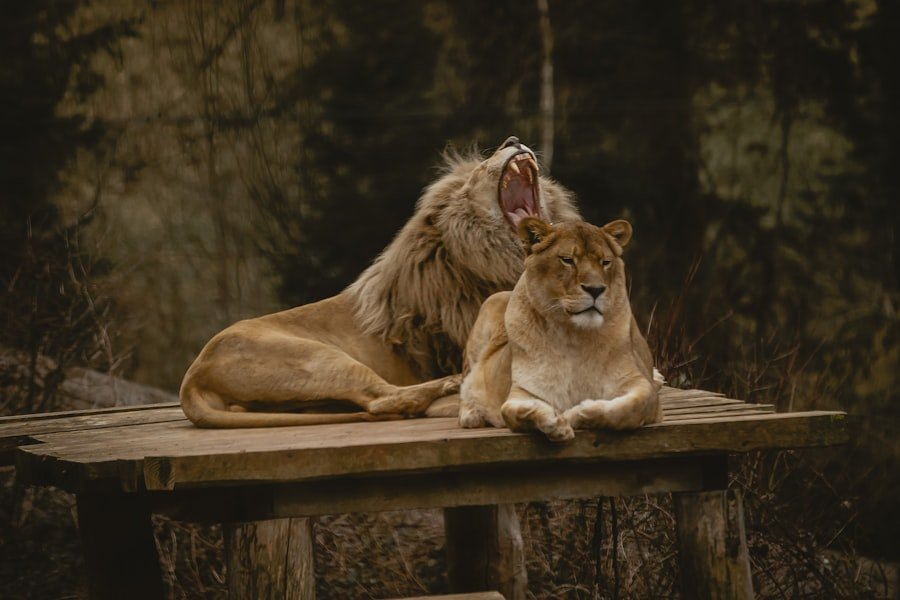
Communication: Lions communicate through vocalizations such as roars and growls that can be heard over long distances. These vocalizations serve various purposes, including marking territory, signaling danger, or coordinating group activities during hunts. The deep roar of a lion is not only a display of strength but also a means of asserting dominance within their territory.
Additionally, body language plays a crucial role in lion communication; subtle movements can convey aggression or submission among pride members.
Ravens are known for their complex vocalizations that include caws, croaks, and even mimicking sounds from their environment. Their ability to imitate human speech or other animal calls showcases their remarkable cognitive abilities. Ravens use vocalizations not only for communication within their flocks but also as tools for problem-solving and social interaction.
Their diverse range of sounds allows them to convey different messages depending on the context, making them one of the most intelligent bird species.
Defense Mechanisms: Lions rely on their strength and speed to defend themselves against threats from rival predators or intruders into their territory. Their powerful bodies enable them to engage in fierce confrontations when necessary, using their sharp claws and teeth as weapons. Additionally, the social structure of prides provides an advantage; when threatened, lions will band together to protect one another from danger.
In contrast, ravens employ intelligence and agility as their primary defense mechanisms. Rather than confronting predators head-on, they often use evasive tactics to escape danger. Ravens are known for their ability to outsmart potential threats by employing distraction techniques or flying away quickly when danger approaches.
Their keen awareness of their surroundings allows them to avoid confrontations altogether while still ensuring their survival.
Symbolism and Mythology: Both lions and ravens hold significant symbolism in various cultures and mythologies around the world. Lions are often associated with power, courage, and nobility; they are frequently depicted as symbols of royalty in heraldry and art. In many cultures, lions represent strength and protection, embodying the qualities of a leader or guardian figure.
Conversely, ravens are steeped in mystery and wisdom across different cultures. In Norse mythology, they are associated with Odin, the god of wisdom and war; they serve as his messengers and symbols of knowledge. In many Native American traditions, ravens are seen as tricksters or creators who possess deep insight into the world around them.
This duality of symbolism highlights how both creatures embody essential aspects of human experience—strength in the case of lions and wisdom in the case of ravens.
Human Interaction: Lions and ravens have both been featured prominently in human art, literature, and folklore throughout history. Lions have long been celebrated as symbols of bravery and leadership; they appear in countless stories ranging from ancient myths to modern literature as embodiments of strength and valor. Their majestic presence has inspired artists across cultures to depict them as symbols of power.
Ravens have also captured human imagination through folklore and storytelling; they often appear as wise figures or cunning tricksters in various narratives. Their intelligence has led to numerous tales highlighting their problem-solving abilities or moral lessons about cleverness versus brute strength. Both animals serve as powerful symbols that resonate with human experiences across time and cultures.
Conservation Status: Lions are currently listed as vulnerable on the IUCN Red List due to habitat loss, poaching, and human-wildlife conflict. Their populations have declined significantly over the past few decades as human encroachment on natural habitats continues to threaten their survival. Conservation efforts are underway to protect lion populations through habitat preservation and anti-poaching initiatives.
In contrast, ravens are classified as least concern on the IUCN Red List; however, they still face threats from habitat loss due to urbanization and environmental changes. Despite this status, ravens have shown remarkable adaptability in urban environments where they thrive alongside humans. Both species highlight the importance of conservation efforts aimed at preserving biodiversity while recognizing the challenges posed by human activities.
The ultimate showdown between lions and ravens showcases the unique strengths and abilities of these two incredible creatures—each with its own impressive traits and characteristics. While lions embody raw power and social cohesion within prides, ravens exemplify intelligence and adaptability across diverse habitats. Together they represent two sides of nature’s coin: strength versus cunning.
As we reflect on these magnificent animals’ roles within ecosystems and cultural narratives alike, we gain insight into our relationship with nature itself—one that is filled with complexity yet rich with meaning. Whether it be through tales of bravery or wisdom passed down through generations or through our ongoing efforts toward conservation—lions and ravens continue to inspire awe while reminding us of our responsibility toward protecting these remarkable creatures for future generations to admire.
In the recent thrilling encounter between the Lions and the Ravens, fans were treated to a display of athleticism and strategy that kept everyone on the edge of their seats. While the game was a spectacle in itself, it also highlighted the importance of community support and engagement, much like the initiatives seen in other areas of life. For instance, the article on autism support services in Perth schools showcases how communities can come together to provide essential support and resources, ensuring that everyone has the opportunity to thrive, whether on the field or in everyday life.
You may also find these helpful: Top choice for property management services in byford and Real estate forecast Thornlie.