
Quick Summary: In 2026, Perth rental prices surged fastest in suburbs with tight supply, especially in premium coastal and inner-city areas. Houses in Dalkeith led with a 27.8% increase, while units in Applecross grew 25%. Limited rental stock and strong demand drove these gains, but affordability concerns are slowing growth. Investors should focus on supply, vacancy rates, and demand durability before buying.
Perth rents hit new highs in 2026, but Perth Rental Growth was not even. REIWA-linked reporting and Domain data show Dalkeith led annual house gains, while Applecross led units. Quarterly moves were sharper in select pockets, shaping the Fastest Rents Perth story. For investors, Perth Suburbs Rents now drive cash flow and review timing. This guide tracks Perth Rental Growth by houses and units, and explains the supply, demand, and affordability signals behind Perth Rental Growth.
Which Perth Suburbs Posted the Biggest Rent Gains in 2026?
House Rent Leaders
For houses, Dalkeith led Perth by a clear margin. Its median weekly house rent jumped 27.8% to $1,725 over the 2025-26 financial year, according to REIWA data republished by The National Tribune. That tells you premium suburbs still had room to run, not just entry-level areas.
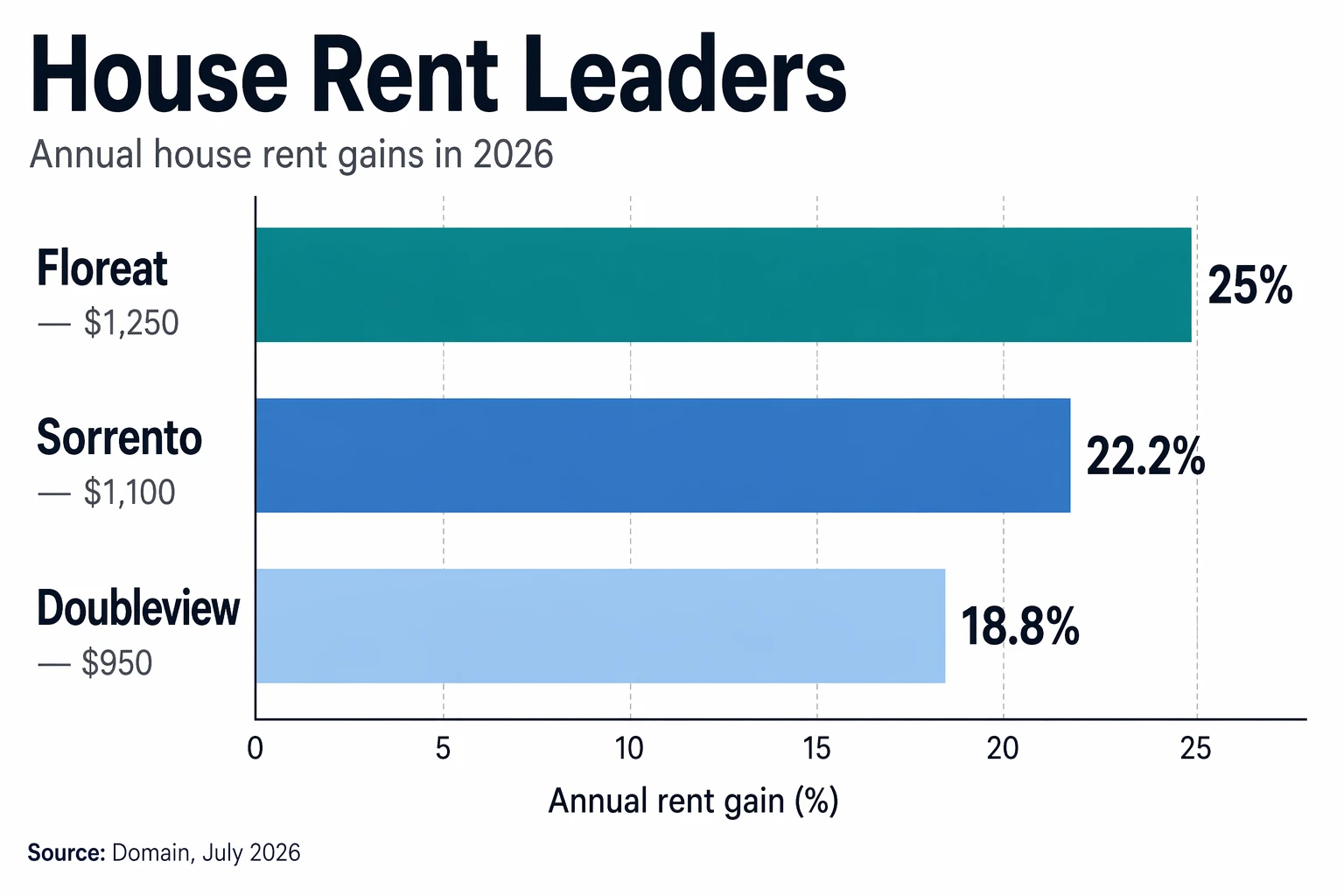
Other strong movers sat in Perth’s western and northern belt. WAtoday’s rental report says Floreat rose 25% to $1,250, Sorrento climbed 22.2% to $1,100, and Doubleview lifted 18.8% to $950.
- Premium coastal and riverside stock led growth
- Family homes saw the biggest jumps
- Tight supply kept upward pressure in place
Fast rent growth did not only hit cheaper suburbs – blue-chip houses surged too.
Unit Rent Leaders
Units told a slightly different story. Applecross posted the biggest annual gain, with median unit rent up 25.0% to $875 across 2025-26, based on REIWA figures via The National Tribune.
Shorter-term data shows where momentum built during 2026. In March, REIWA reported the strongest monthly unit rent rises in:
- South Perth – up 7.7% to $700
- Scarborough – up 6.0% to $795
- Subiaco – up 4.0% to $780
- Claremont – up 3.3% to $775
- Innaloo – up 3.3% to $775
- Inner-city and lifestyle suburbs dominated
- Well-located units stayed in high demand
- Investors should track both annual and monthly moves
Also Read: https://smartrealty.com.au/property-management-company
Why These Suburbs Outpaced the Wider Perth Market
Supply Is Still Too Tight
The main driver was simple: too few rentals in the places tenants wanted most. Perth’s vacancy rate fell to 2.0% in March 2026, and REIWA said supply improved more in outer house-and-land areas than in inner and middle suburbs, where competition stayed sharper according to REIWA. That helps explain why well-located suburbs with jobs, transport, and established homes saw faster rent gains than the wider market.
Tight supply does not lift every suburb equally – it lifts the suburbs where new stock is hardest to add.
- Fewer listings near key job hubs
- Building delays keeping renters in the market longer
- Investor exits cutting rental choice
Affordability Is Starting to Slow Growth
Rent growth stayed strong, but it is now meeting tenant resistance. WA rental affordability worsened again in 2026, with Perth metro median rent at $750 a week in Anglicare WA’s snapshot reported here. That means some high-growth suburbs may keep rising, but at a slower pace as renters trade down, share homes, or move further out.
- Premium suburbs face a ceiling sooner
- Mid-market suburbs can still capture overflow demand
- Landlords need sharper pricing, not automatic increases
Also Read: Investment Properties vs Shares: Which Builds Wealth Faster?
What Investors Should Watch Next
Use rent-growth data as a filter, not a buy signal. Fast rent gains can show strong demand, but they can also mark a suburb that is close to its ceiling.
- Check supply first – Perth had 2,315 rental listings in the week ending 5 July 2026, while rental stock was still 6.7% lower than a year ago according to REIWA’s weekly snapshot.
- Watch vacancy and policy risk – REIWA said Perth’s vacancy rate fell to 2.0% in March 2026 and flagged investor caution around tax and tenancy changes in its April update.
- Compare houses and units separately.
- Test the rent against local wages and tenant depth.
- Buy where demand looks durable, not just hot this quarter.

The best next buy is usually the suburb with tight supply, solid leasing depth, and room for one more rent rise.

Want to act on Perth’s fastest-rising rental suburbs with less guesswork? Talk to Smart Realty for suburb-led advice, tenant demand insight, and hands-on property management.
Frequently Asked Questions
Q1: Which Perth suburbs had the fastest rent growth in 2026 and what factors drove this?
Suburbs with tight vacancy, better transport, and lower entry prices led rent growth. Houses and units often moved differently. Watch supply, local jobs, and buyer demand before acting.
Q2: What are the top investment suburbs in Perth for rental yields in 2026?
The best yield suburbs usually sat below Perth’s median price but kept strong tenant demand. Focus on cash flow, vacancy risk, and upkeep costs, not yield alone.
Q3: How has Perth property prices and rental market performed in 2026?
Perth stayed firm in 2026, with rents rising faster than prices in many suburbs. That helped yields, but some areas now look stretched, so suburb selection matters more.
Conclusion
Perth’s fastest rent gains in 2026 came from tight-supply suburbs, but houses and units did not move the same way. Perth rents stayed high as REIWA flagged stronger pressure through 2026, even as WAtoday reported affordability limits emerging.
Want the full picture? Pair this with our guide to Top 5 Property Management Tips for Floreat.
This connects to what we covered in Is 8% management fee reasonable? — worth a read if you are exploring your options.
For related advice specific to your situation, our article on Fastest Home Sale Rates: Perth Real Estate Agencies covers the essentials.
Want the full picture? Pair this with our guide to Exploring Scarborough WA 6019: A Coastal Gem.
For a deeper dive, see our breakdown of Exploring Perth’s Northern Suburbs Real Estate Market.
Want the full picture? Pair this with our guide to When to List Property in Innaloo: Best Timing.