
Quick Summary: Perth’s tight vacancy rate near 0.7% and gross yields of 4-6% make it one of the few Australian markets where a property portfolio can grow around real cash flow. The core method is simple: buy smaller units or townhouses in middle and outer suburbs where rent clears mortgage repayments, rates, insurance, management fees and maintenance after every cost, then recycle equity once total debt stays under 80% of each property’s value. With 2026 tax reforms cutting the value of negative gearing deductions, positive-cash-flow assets hold up while loss-makers suffer, which is why each purchase should stand on its own weekly surplus before growth is counted. Smart Realty’s Mahi Masud, who manages over 1,800 Perth properties, argues that hands-on local management and three or four well-bought assets clearing $50-100 a week each beat a larger portfolio of geared properties waiting on price growth.
Around 68% of Australian investors never buy a second property. Perth has changed that math. With vacancy rates near 0.7%, gross yields of 4-6% and rents up 6.7% a year, this is a rare market where a cash-flow-led property portfolio can grow in years, not decades. This guide shows you how: the yield math, the 2026 tax reform that rewires it, and the management discipline that keeps each property paying its way. Smart Realty principal Mahi Masud, with 20+ years managing 1,800+ Perth properties, shares the method throughout.
Why Cash Flow Is the Right Anchor for a Perth Portfolio in 2026
Cash flow is what keeps a property portfolio alive when rates, repairs and vacancies hit. Growth alone cannot pay a mortgage, but rent coming in above what goes out can fund your next purchase.
Perth’s Rent-Led Yield Expansion Explained
Perth rents have climbed faster than prices have cooled, so yields have widened. Vacancy rates have sat near historic lows, and national rent data shows Western Australia recording the strongest rental growth of any state. That mix means a well-bought property can now cover its own costs instead of draining your salary every month. We break down where those yields sit suburb by suburb in our guide to high-yield Perth investment property.
What the 2026 Tax Reform Means for Your Yield
The 2026 tax changes cut the value of deductions used to claim losses, so yield math needs rebuilding. Start from net rent after costs, not gross, and stress-test each property against higher land tax and lower write-offs. A positive-cash-flow asset barely notices the reform; a geared loss-maker feels it immediately. Model the after-tax return first, then decide.
Build each purchase to stand on its own rent. Growth then becomes a bonus, not a survival plan.
The Numbers That Decide Whether a Perth Property Cash Flows
Rent minus every cost, not the headline yield, decides if a property pays you or you pay it.
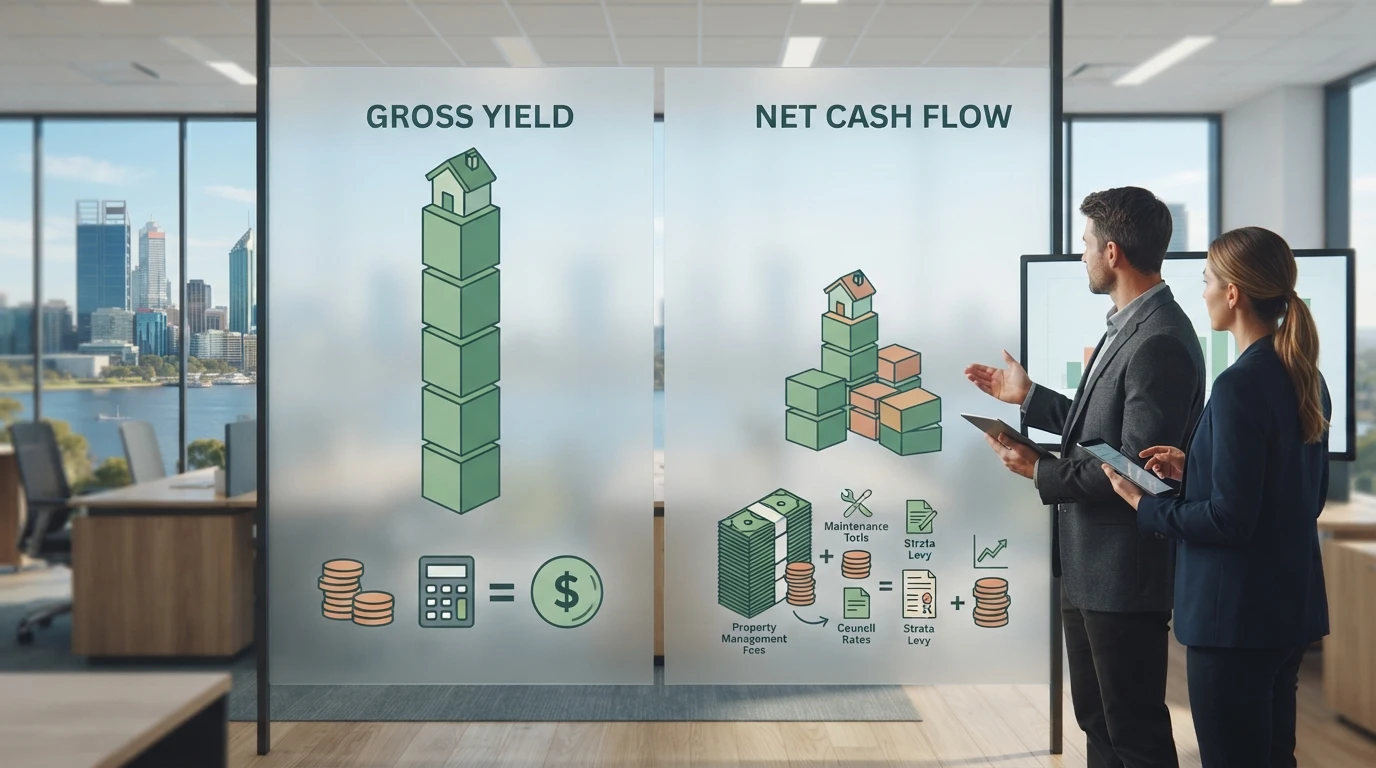
Gross Yield vs Net Cash Flow: The Real Test
Gross yield is just annual rent divided by the purchase price. It ignores the costs that eat the rent. Mortgage repayments, council rates, insurance, property management fees, maintenance and strata levies all come out first. A 4.2% to 6.1% gross yield can still lose money each week once interest is paid, so model the weekly figure after every expense.
| Metric | What It Tells You |
|---|---|
| Gross yield | Rent against price, before costs |
| Net cash flow | Weekly surplus or shortfall after all costs |
Perth Property Types That Actually Cash Flow
Smaller, cheaper properties usually win. Units and townhouses in Perth’s middle and outer suburbs carry lower purchase prices, so the same rent produces a better return. Suburbs such as Thornlie and Como show how modest entry prices plus firm rents can push a property into genuine surplus. Duplexes add a second income stream on one block of land.
A Cash-Flow-First Plan to Stack Your Perth Properties
Stacking properties works when each new purchase covers its own costs before you add the next. Build the plan around yield, not hope.
From One Property to Two: Equity Recycling Done Right
Most investors use equity in their first property as the deposit on a second. The safe version keeps the total debt under 80% of each property’s value, so you avoid lender’s mortgage insurance and protect your buffer. Model the new loan at today’s rate plus two points, then check the weekly figure after every cost. If it loses money in that stress test, wait or buy cheaper.

Diversifying Within Perth, Not Across Australia
Interstate buying adds risk you cannot inspect or manage. Perth rewards local focus: growth corridors beyond the inner city offer different price points and tenant pools within one driveable market. Spread across suburbs, not states, and you can visit, vet and hold each asset yourself. Strong cash flow plus hands-on management is what makes the third purchase possible.
If you want that kind of oversight, Smart Realty manages each property as if it were the principal’s own, so every asset stays ready to leverage.

Most investors stall after one property because the numbers were never built around cash flow. Get a straight, no-hidden-fee review of your portfolio numbers with Mahi Masud at Smart Realty. Book your chat today.
Frequently Asked Questions
Q1: How can investors build a Perth property portfolio?
Buy each property so its rent covers all costs, then recycle equity once debt sits under 80% of each value. Stress-test the new loan at higher rates before you commit to purchase number two.
Q2: How many properties do I need before a portfolio pays me?
There is no fixed number. Three or four well-bought properties each clearing $50-100 a week often outperform five geared loss-makers waiting on growth.
Q3: Should I buy units or houses for cash flow?
Units and townhouses in middle and outer suburbs usually win. Lower entry prices mean the same rent returns a better yield, and strata costs stay modest in smaller complexes.
Q4: How do I protect cash flow between tenants?
Set rent at market, screen tenants carefully and fix maintenance fast to keep good tenants longer. Every vacant week costs roughly two weeks of profit once re-letting fees are counted.
Conclusion
A Perth portfolio that lasts is built on net cash flow, not gross yield. Buy where rent clears every cost, keep debt under 80%, and manage each property closely. With strong rents and tight vacancies, cash-flow investing in Perth rewards discipline over speed.