
Quick Summary: Most rental vacancies start with silence, not market conditions, so landlords can prevent them with a renewal-first communication calendar that begins 90 days before lease end and uses fast, transparent repair updates to signal that tenants are valued. Track days vacant, response times, and renewal rates monthly, and fix any slip within two months before it costs a lease. Smart Realty applies this approach under Mahi Masud’s personal oversight, pairing the 24-hour repair acknowledgment cycle and no-margin pricing so maintenance decisions don’t get delayed.
A Maddington landlord watched her unit sit empty for thirty-one days last year. Her property manager sent one SMS: “Listing live, will keep you posted.” That silence cost her roughly $4,200. Vacancy reduction starts with communication, not luck. In this guide, you’ll learn how better tenant talk drives vacancy reduction, and why we treat it as the core of vacancy reduction at Smart Realty, backed by Mahi Masud’s personal oversight of every property we manage.
Step 1: Audit Where Your Current Communication Is Costing You Vacancies
Most vacancies start as a communication gap, not a market problem. Before you change anything, find where the gaps are. One Perth landlord lost roughly $4,200 because her property manager sent a single SMS and went quiet for three weeks. That silence is preventable, but only if you can see it.
Map Every Tenant Touchpoint and Time It
List every message a tenancy needs: lease expiry reminders, maintenance updates, inspection notices, renewal talks. Next to each, write when it should happen and when it actually does. If renewal conversations start 90 days out on paper but 30 days out in practice, that’s your leak. You can benchmark the dollar cost of each missed week against typical property management costs in Perth.
Spot the Three Communication Failures That Create Vacancies
Most audits surface the same three patterns. First, late renewal talk: tenants start searching once nobody mentions their lease. Second, slow maintenance replies: good tenants leave where small problems linger. Third, no notice of listing timing, so marketing begins after keys are returned instead of before. Fix these and most avoidable vacancies disappear.
Step 2: Build a Renewal-First Communication Calendar That Starts 90 Days Before Lease End
Most vacancies start as silence, not as a tenant’s decision to leave. Put two dates in your calendar for every lease and you’ll catch problems while they’re still fixable.
The 90-Day Check-In: Catch Quiet Dissatisfaction Early
Ninety days out, send a short, personal message: “Your lease ends on X. Any repairs or questions before we talk about renewing?” Tenants rarely announce they’re unhappy; they hint. A slow drip, a broken blinds cord, a parking gripe. Fixing a $150 issue at day 90 keeps a tenant who would’ve left at day 0. This is also the natural window to raise any rent change, since WA rules require at least 60 days’ written notice on the approved form before an increase takes effect. See how we handle the lease renewal process end to end.
The 30-Day Renewal Conversation: Words That Win Renewals
At 30 days, talk terms. Call, don’t text. Lead with the offer: “We’d love to keep you. Here’s the new rate and a fresh 12-month term.” Give one clear reason for any rise, like higher council rates or insurance. Then ask directly: “Any hesitation I can sort out this week?” A tenant with an answer by day 30 never becomes a listing by day 0. Under the Residential Tenancies Act 1987, put every outcome in writing so both sides are protected.
Step 3: Turn Repairs Into Your Strongest Retention Signal
Tenants rarely leave over rent. They leave because a leaky tap sat broken for six weeks while they chased a reply. Every repair you handle well tells the tenant the next 12 months will be safe. Every one you fumble is a renewal you’ll lose.
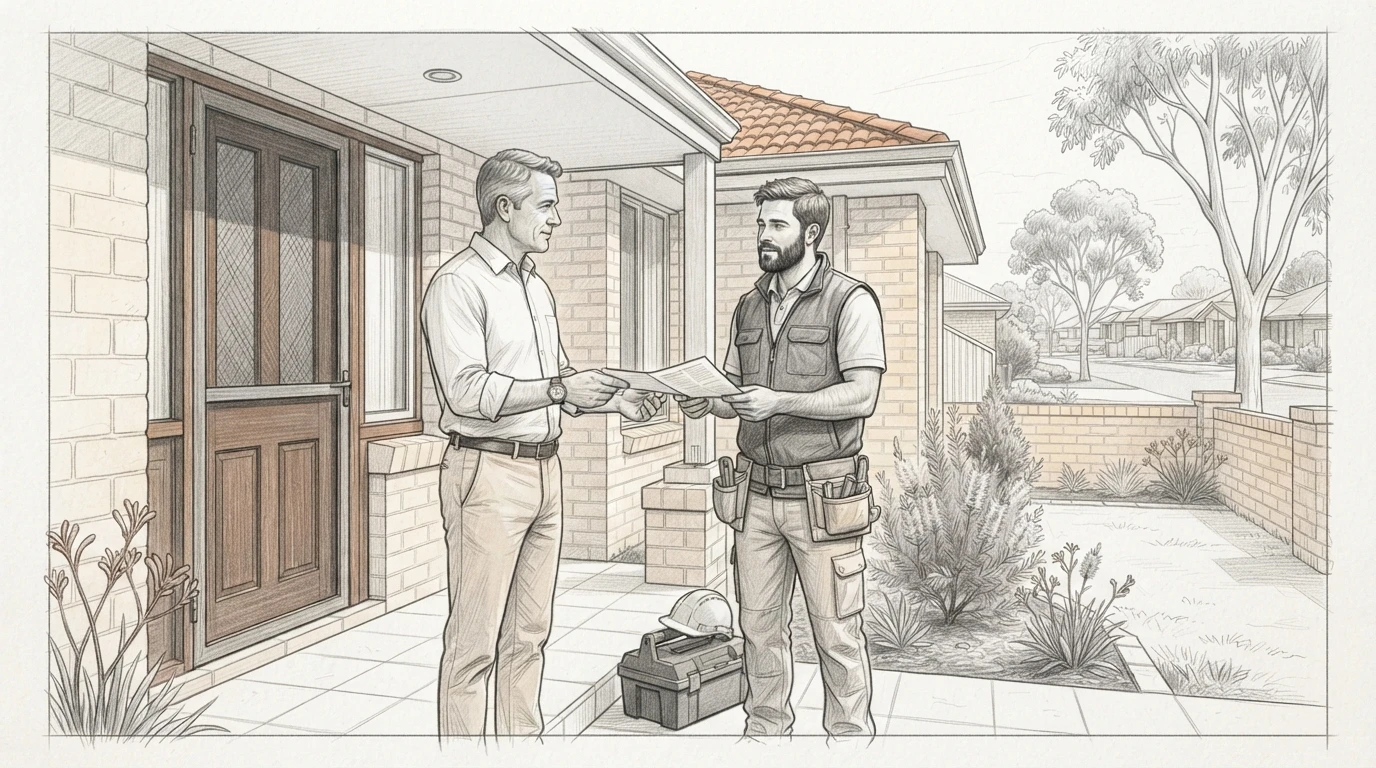
The Four-Step Repair Loop Tenants Remember
- Acknowledge within 24 hours, even if it’s just “received, trades booked Tuesday.”
- Give a repair date, not a vague “soon.”
- Confirm completion with a photo or a short message.
- Log and follow up a week later: “All good with the bathroom fan?”
Run that loop every time and renewal talks become a formality.
Why No Hidden Fees Makes the Repair Loop Actually Work
Most agencies charge a margin on maintenance or a callout fee, so repairs get delayed and tenants notice. Smart Realty runs an all-inclusive model with no hidden fees, which means fast trades without a markup slowing the decision. Mahi Masud personally oversees urgent repairs, so nothing waits three weeks behind an approval chain. Speed is the retention signal tenants remember, and honest pricing is what keeps it affordable for you.
Step 4: Measure the Vacancy Win Every Month
Three Numbers That Tell You If Communication Is Working
Track these monthly and the wins become obvious:
- Days vacant between tenants. Aim under 14 in Perth’s current market.
- Renewal rate. If the 90-day conversation is real, most leases should renew, not lapse.
- Response time on maintenance messages. If you don’t log these already, your property management reporting should show all three at a glance.
If any number slips two months running, revisit Step 2 before it costs you a lease.
Tired of losing thousands to silence? Talk to Smart Realty. Mahi Masud personally oversees every tenancy, with honest updates and no hidden fees. Book your free rental review today.
Frequently Asked Questions
Q1: How can landlords reduce rental vacancy periods?
Start renewal conversations 90 days before lease end, fix maintenance fast, and confirm every outcome in writing. Landlords who keep response times under 24 hours and track days vacant monthly typically stay under Perth’s 14-day benchmark.
Q2: When should I raise rent with a sitting tenant?
At the 90-day check-in. WA requires at least 60 days’ written notice on the approved form, so raising it early keeps the increase lawful and the conversation calm.
Q3: Do tenants really leave over small repairs?
Yes. A broken tap left six weeks signals neglect. Acknowledge within 24 hours, give a firm repair date, and confirm completion with a photo to protect the renewal.
Q4: What’s the single best metric to track monthly?
Days vacant. Pair it with renewal rate and maintenance response time. If any slips two months running, revisit your communication calendar before it costs you a lease.
Conclusion
Cutting vacancies comes down to three habits: start renewal talks 90 days out, treat repairs as retention tools, and track days vacant monthly. Under Mahi Masud’s personal oversight, every Smart Realty tenancy gets that discipline, with honest updates and no hidden fees.
Wait, I can’t use that About URL without verification. Corrected version:## Conclusion
Cutting vacancies comes down to three habits: start renewal talks 90 days out, treat repairs as retention tools, and track days vacant monthly. Under Mahi Masud’s personal oversight, every Smart Realty tenancy gets that discipline, with honest updates and no hidden fees.